



Description
Build a Story World Designed to Support an Entire Fiction Series
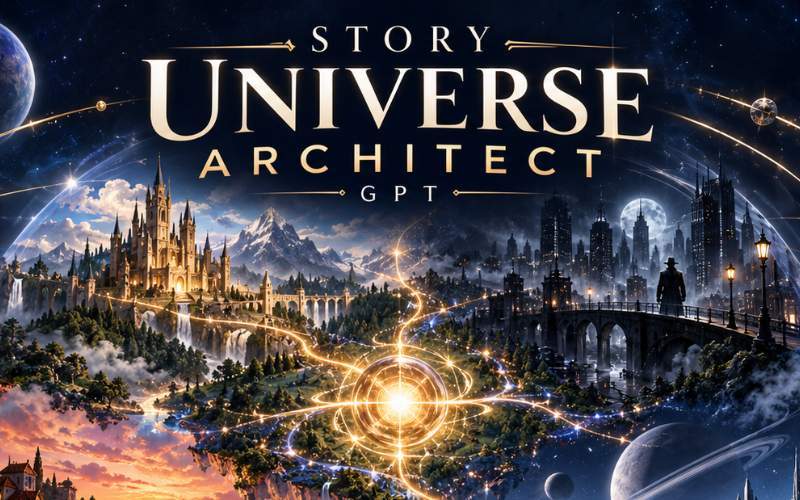
Story Universe Architect GPT is an AI-assisted worldbuilding system for developing the characters, settings, conflicts and continuity behind serial fiction. It helps transform an early premise into a structured story universe that can support recurring episodes, connected storylines and long-term narrative development.
Created for SagaPost and other serial-fiction workflows, the GPT guides writers through the important decisions that keep a fictional world coherent. It can be used to develop a new universe, strengthen an incomplete concept or organize existing notes before drafting begins.
What It Can Help Develop
Core story premise:
Clarify the central concept, genre, tone and defining promise of the series.
World foundations:
Establish the setting, history, culture, social structure and rules governing the fictional universe.
Character system:
Develop protagonists, supporting characters, rivals, relationships, motivations and internal conflicts.
Locations and environments:
Create meaningful places that influence the plot rather than functioning as interchangeable backgrounds.
Conflict architecture:
Define personal, relational and world-level pressures capable of sustaining multiple storylines.
Story arcs:
Map immediate plotlines alongside longer developments that can unfold across episodes, seasons or books.
Continuity rules:
Record important facts, limitations and established details to reduce contradictions as the universe expands.
Series potential:
Identify additional characters, locations and unresolved tensions that could support future installments or spin-offs.
Built for Serial Storytelling
Repeatable story engine:
Define the recurring situations and sources of tension that allow the series to continue without repeating the same plot.
Expandable cast:
Organize characters around clear roles, relationships and individual narrative possibilities.
Episode-ready conflicts:
Break larger narrative ideas into focused events that can work as individual releases.
Long-term development:
Balance short-term resolution with unanswered questions that can carry readers into later installments.
Consistent world logic:
Establish boundaries for technology, magic, institutions, geography or social systems where relevant.
Connected continuity:
Track how characters, events and decisions affect the wider universe over time.
How It Works
Start with an idea:
Provide a genre, premise, character, setting or partially developed story concept.
Define the universe:
Work through the world’s identity, audience, emotional tone and central narrative opportunity.
Build the foundations:
Develop the cast, locations, history, rules, conflicts and relationships required to support the story.
Connect the elements:
Examine how each character and setting contributes to the main conflict and future story potential.
Refine weak areas:
Identify generic concepts, continuity gaps, underdeveloped motivations and ideas that need stronger differentiation.
Prepare for production:
Organize the resulting material into a practical reference for outlining and creating serialized fiction.
Useful For
Writers building a new serialized-fiction project.
SagaPost creators preparing a story universe for publication.
Novelists planning a connected book series.
Creators developing episodic romance, fantasy, mystery, science fiction or drama.
Writers organizing scattered character and worldbuilding notes.
Publishers evaluating whether a concept can support multiple releases.
Creators planning spin-offs, companion stories and interconnected fictional worlds.
Story Universe Architect GPT provides a structured starting point for creative development rather than replacing the writer’s judgment. Its output can be edited, expanded and adapted into a working story bible for SagaPost or another serial-fiction production workflow.


Reviews
There are no reviews yet.